


The invoice gets shared once, but it rarely ends there.
A few days later, the same invoice shows up again; someone needs it for reconciliation, someone else checks the billing details, and later it comes up again for adjustments or tax proof.
Finance teams may ask for billing proof. Credit adjustments may need validation before the next order. TDS certificates may need to be resubmitted during tax checks.
The delay rarely comes from the document itself. It happens because the same files get searched, resent, and validated across multiple teams.
That is why digital invoicing has become an essential part of every strong B2B e-commerce platform. It reduces manual follow-ups, keeps records accessible, and helps partners move faster after every order.
Redington Online starts reducing that paperwork friction by making invoice access faster whenever teams need to revisit an order.
Faster Invoice Access Without Follow-Up Delays
The first challenge usually appears when teams need to retrieve the invoice again.
In many cases, this turns into a delay because the document is buried in old email threads, shared folders, or offline finance records. Teams spend time searching, requesting, or waiting for the right copy before they can move forward.
Redington Online removes that dependency by allowing partners to download and upload invoices for both online and offline orders.
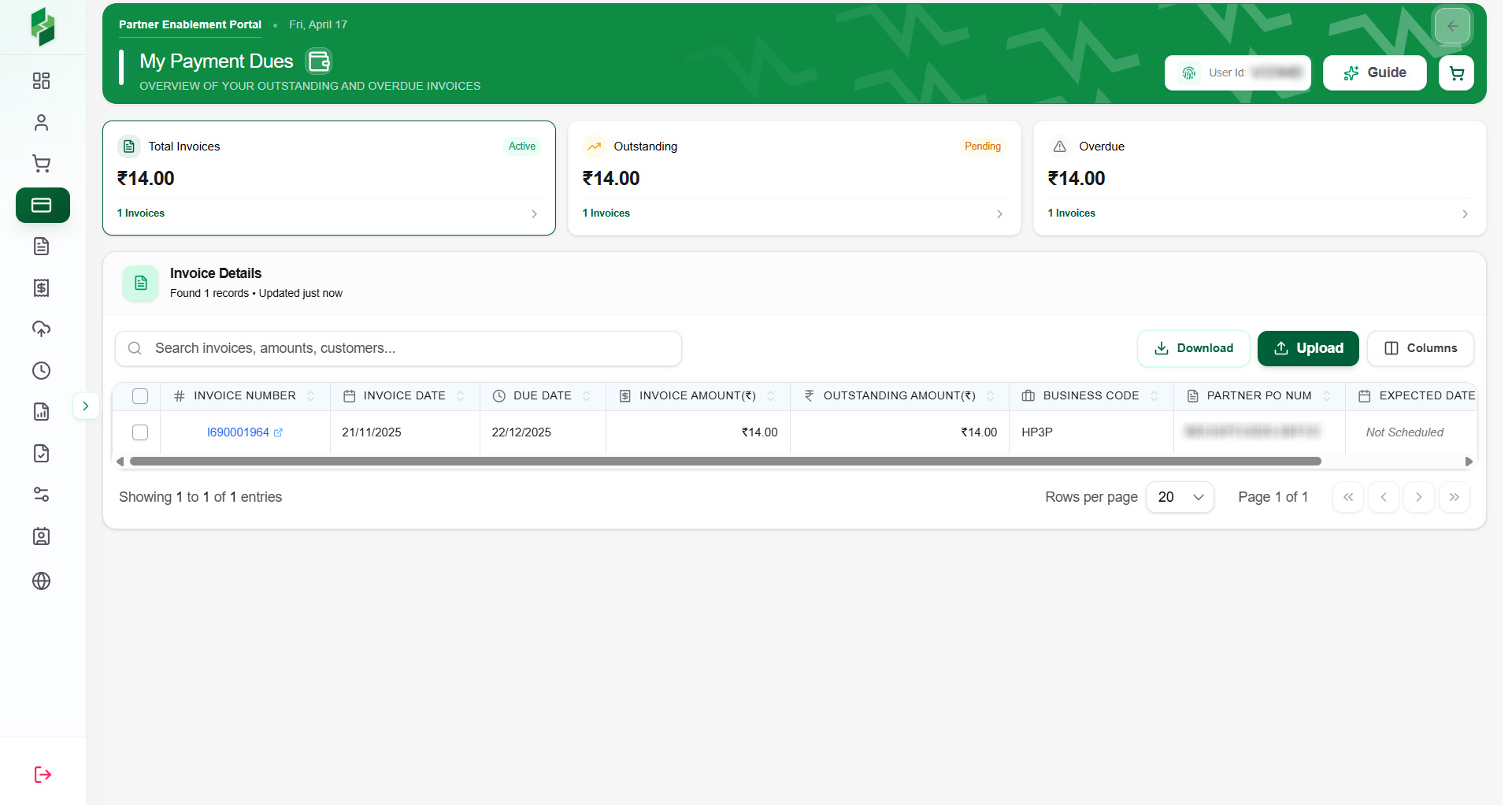
Instead of relying on follow-ups, partners can quickly access the required invoice and move directly into reconciliation, proof sharing, or finance closure.
This is where B2B invoicing becomes more effective in day-to-day finance workflows.
Once invoice access becomes easier, the next dependency usually shifts to validating the financial adjustments linked to that billing cycle.
Credit Note and ORC Visibility Before Next Action
The next delay usually starts when partners need clarity on adjustments.
Before proceeding, partners often look for Credit Note confirmation and ORC updates for that order. Without visibility, the next step slows down because someone has to confirm adjustment values, payout updates, or commission changes.
Redington Online solves this by giving partners direct visibility into both Credit Notes and ORC details.
This makes the next finance step much easier.
Instead of pausing the workflow for internal confirmation, partners can quickly validate the update and move ahead with better finance clarity.
This is where platform invoicing improves speed beyond simple document access.
When those adjustments are also visible, the repeated follow-up usually moves to tax proof and credit documentation.
TDS Upload and Credit Record Continuity
Tax and finance documents create another layer of repeated manual work.
TDS certificates are often requested again during reconciliation or audit checks. Credit reports may also need review before larger purchases or outstanding validations. The issue is that the same files keep moving through emails, attachments, and repeated finance follow-ups.
Redington Online simplifies this by allowing partners to upload TDS certificates and manage credit reports directly on the platform. Instead of resending the same tax proof multiple times, teams can maintain cleaner finance records within the platform itself.
This is where paperless documentation becomes useful in audits, tax reviews, and credit planning.
When these finance records are also centralized, the bigger gains begin to show across reconciliation speed and next-order readiness.
What Changes in Day-to-Day Partner Operations
The real impact of digital invoicing is not in storing documents. It is in how much time partners stop losing after every order.
Without easy access to invoices and related records, even simple financial steps become follow-ups. Teams spend time searching for documents, waiting for confirmations, or resending the same files across functions.
Redington Online changes that flow.
Partners no longer have to depend on internal teams to retrieve invoices, confirm adjustments, or validate tax documents. Instead, they can access what they need and move forward without breaking the workflow. This shows up in day-to-day operations in a very practical way.
- Reconciliation becomes faster because the invoice and adjustment details are already available.
- Payout validation becomes easier because Credit Notes and ORC updates are visible when needed.
- Tax documentation takes less effort because TDS records are already maintained in one place.
- Credit decisions become clearer because supporting records are accessible without delay.
Instead of spending time managing paperwork from the previous order, partners can focus on planning the next one.
Manual paperwork rarely creates value. It only slows down the work that comes after the order.
By keeping invoice access, Credit Note visibility, Overriding Commission updates, TDS uploads, and credit records inside Redington Online, partners can manage documentation faster and reduce the repeated follow-ups that usually slow finance workflows.
That is where digital invoicing becomes more than a document feature. It becomes a faster way to close finance loops and move confidently into the next order.
Explore invoice downloads, CN and ORC visibility, and finance documentation workflows on Redington Online:
Explore Redington Online