


Key Takeaways
- Manual coordination slows down B2B distribution as order volumes and product complexity increase.
- Partial digitization often creates more work when systems are not connected end to end.
- A unified digital platform removes repeated follow-ups and gives teams clarity on stock, pricing, and orders.
- When information is reliable and visible, planning becomes easier and decisions are made with more confidence.
- Redington Online supports this shift by reducing routine effort and helping partners focus on growth instead of coordination.
Most distribution teams do not wake up one day and decide to go digital. It usually starts with small adjustments. Fewer follow ups. Faster order confirmations. Less time spent checking the same details again and again. Over time, these changes slowly reshape how b2b distribution actually works.
As order volumes increase and product ranges expand, manual coordination becomes harder to manage. Emails, calls, and spreadsheets that once worked begin to slow things down. Decisions take longer. Teams depend more on each other just to move a single order forward. This is when many distributors start questioning whether their current way of working can really support growth.
Where Manual Processes Still Slow Teams Down
In many b2b wholesale distribution businesses, a lot of the working day still goes into checking small details. Someone needs to confirm stock. Someone else needs to double-check pricing. Another order is waiting on an update because no one is sure where it stands.
Why Partial Digitization Often Ends Up Adding Work
To improve efficiency, many distributors start by introducing individual tools. An ERP system. A tracker. Maybe some products for online ordering. These steps help, but only to a point.
What usually happens is this. Teams jump between systems just to complete one simple task. Some details are visible online, others are not. So partners still end up calling or sending mails to get clarity before moving ahead. Instead of reducing effort, this halfway setup often creates more coordination than before.
This is something that comes up often when distributors start adding tools without fully connecting them. It is not that the tools are wrong. The problem is that information stays scattered, which means people still have to stitch things together manually.
What Actually Changes When Work Moves Online
The real shift happens when everyday work moves into one b2b distribution platform. Teams stop chasing updates and start checking things themselves. Partners no longer wait around for confirmations before moving ahead.
A dependable b2b online ordering system usually changes things in fairly practical ways:
You can see what’s available and what it costs before placing the order, which removes a lot of hesitation.
Orders move ahead without someone having to confirm things manually or follow up multiple times.
Delivery timelines and order status are easy to look up, instead of calling or mailing someone for an update.
Everyone involved is working with the same information, which avoids confusion later in the process.
Once these basics are handled inside the system, a lot of the back and forth drops away. Work that earlier depended on coordination starts moving on its own.
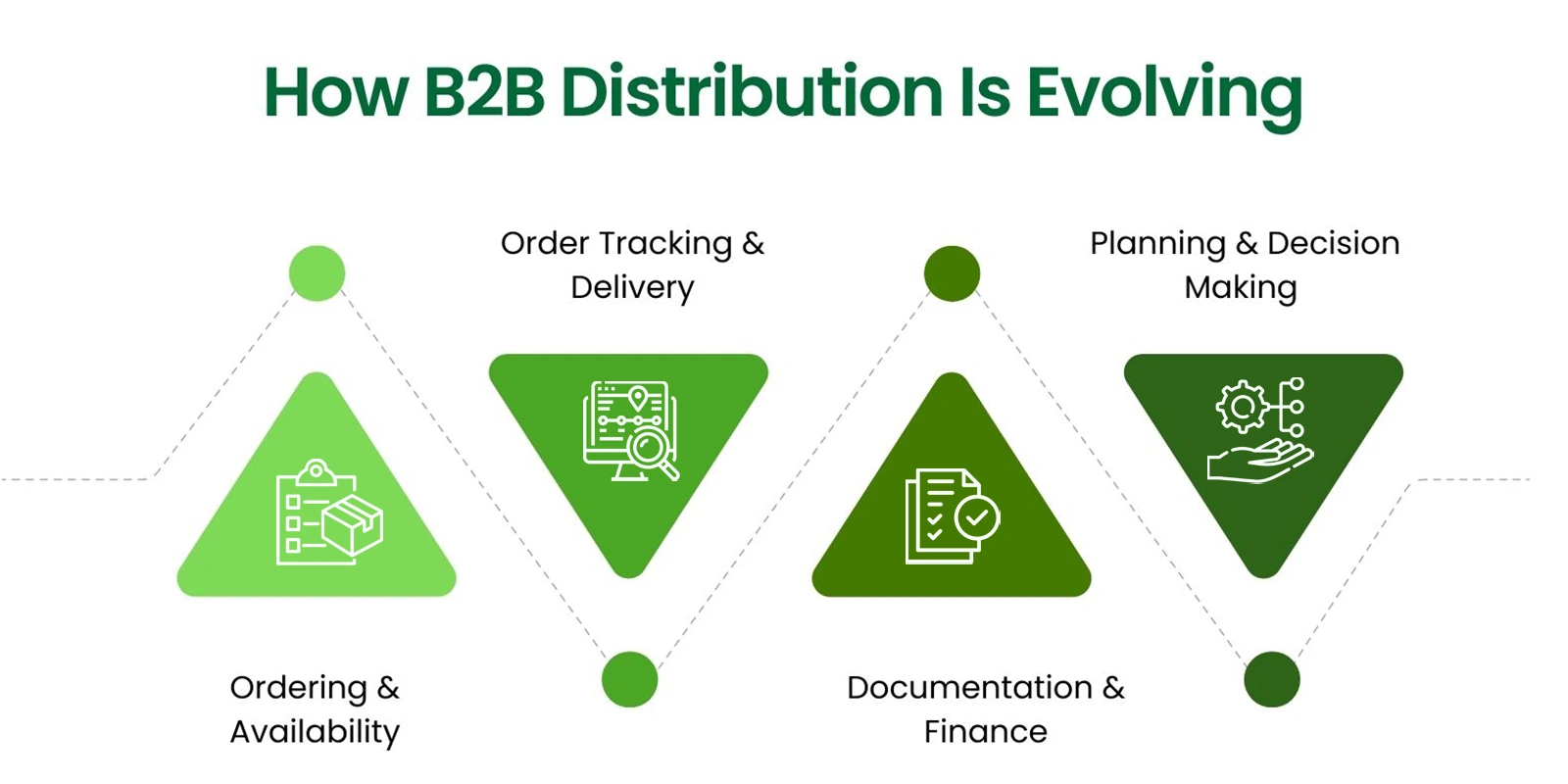
You can see this clearly in 5 Ways Redington’s Online Platform Simplifies Your Business Operations, where ordering, RFQs, delivery visibility, documentation, and stock allocation come together in one place.
How Day-to-Day Decisions Become Easier
Once manual steps are reduced, teams notice a different kind of improvement. Decisions feel easier. Not because work disappears, but because information is reliable.
Orders are placed with a clearer idea of what’s actually available.
Planning begins to line up better with delivery timelines without any guesswork.
Extra stock is no longer bought just to stay safe.
Errors caused by miscommunication can be reduced without needing constant follow ups.
This clarity also opens up new opportunities in b2b distribution. With better visibility, partners can respond faster to demand, manage cash flow more carefully, and make smarter bulk purchases when the timing feels right.
What This Shift Means for Retailers and Partners
When day-to-day checks move online, the change is felt first by retailers and partners. They are no longer spending large parts of the day answering the same questions about stock, pricing, or order status. Those basics are already visible.
What that frees up is time and attention. Sales teams can focus more on conversations that actually matter. Discussing which models make sense for a partner’s requirement. Talking through quantities instead of just availability. Spending time on larger or more complex deals instead of chasing updates.
From the partner’s side, things feel more straightforward. Orders don’t stall because someone is unavailable. There’s less waiting and less dependency on multiple touchpoints just to get clarity. Over time, coordination becomes smoother simply because fewer things need to be clarified manually.
How Redington Online Fits into This Shift
Redington Online fits into this shift by taking care of the routine parts of procurement in one place. It does not change how partners work with people. It changes how much time is spent on basic checks and follow ups.
Look up products, compare options, see current pricing and stock
Raise and track RFQs without separate mail threads
Check orders and delivery timelines directly
Access invoices and statements when needed
For teams working in b2b wholesale distribution, this cuts down the number of calls and follow-ups and makes planning feel a lot less uncertain.
Conclusion
Across b2b distribution, the move away from manual coordination is already underway. As operations grow more complex, relying on manual processes increases the risk of delays and errors.
A connected b2b distribution platform helps teams stay organised and make quicker decisions. Platforms like Redington Online support this transition by allowing businesses to scale without constantly adding more manual effort.
Explore how Redington Online supports modern distribution workflows at