


Key Takeaways
- Order management in B2B involves more than placing orders and often breaks down when information is spread across different tools.
- A connected order flow helps retailers move from quote to delivery without relying on repeated follow-ups.
- Features like RFQ, order history, shipment tracking, and invoice access reduce day-to-day coordination effort.
- Clear order and delivery visibility makes it easier for retailers to plan and manage commitments.
- Streamlined order management supports smoother operations as order volumes and complexity increase.
In B2B distribution, orders rarely move in a straight line. A quote needs approval. Stock has to be checked. Delivery timelines come into play. Invoices follow later. Somewhere in between, someone usually asks for an update.
It's usually not about the lack of systems. It's about how disconnected they are in day-to-day work. Emails, calls, shared files, and portals all get involved just to move one order forward. That's where delays creep in. A reliable order management system helps bring these pieces together. Not by adding more steps, but by reducing how much coordination is needed from quote to delivery.
How B2B Order Management Usually Plays Out
In a typical B2B setup, order management covers much more than placing an order. Pricing discussions happen first. Orders are raised after approvals. Delivery timelines matter. Documentation comes later. Partners often juggle several orders at once. Without a connected flow, even simple things like checking order status or looking up a previous purchase take more effort than they should. This is where the process of order management starts feeling heavier as volumes grow.
What Makes Order Management Harder
Order issues usually don't come from one big failure. They come from small gaps that repeat.
An order gets placed, but delivery details aren't clear.
Someone needs an invoice, but it's saved elsewhere. A partner wants to check an old order, but has to dig through emails.
Individually, these don't feel serious. Over time, they slow everything down. Managing order management responsibilities across sales, operations, and finance teams becomes harder when everyone depends on different sources for the same information.
Where a Connected Order Flow Helps
On Redington Online, this comes into play during regular work, especially when partners are handling more than one order.
- Partners can pull up their earlier orders when they need to check what was purchased before and repeat the order if needed.
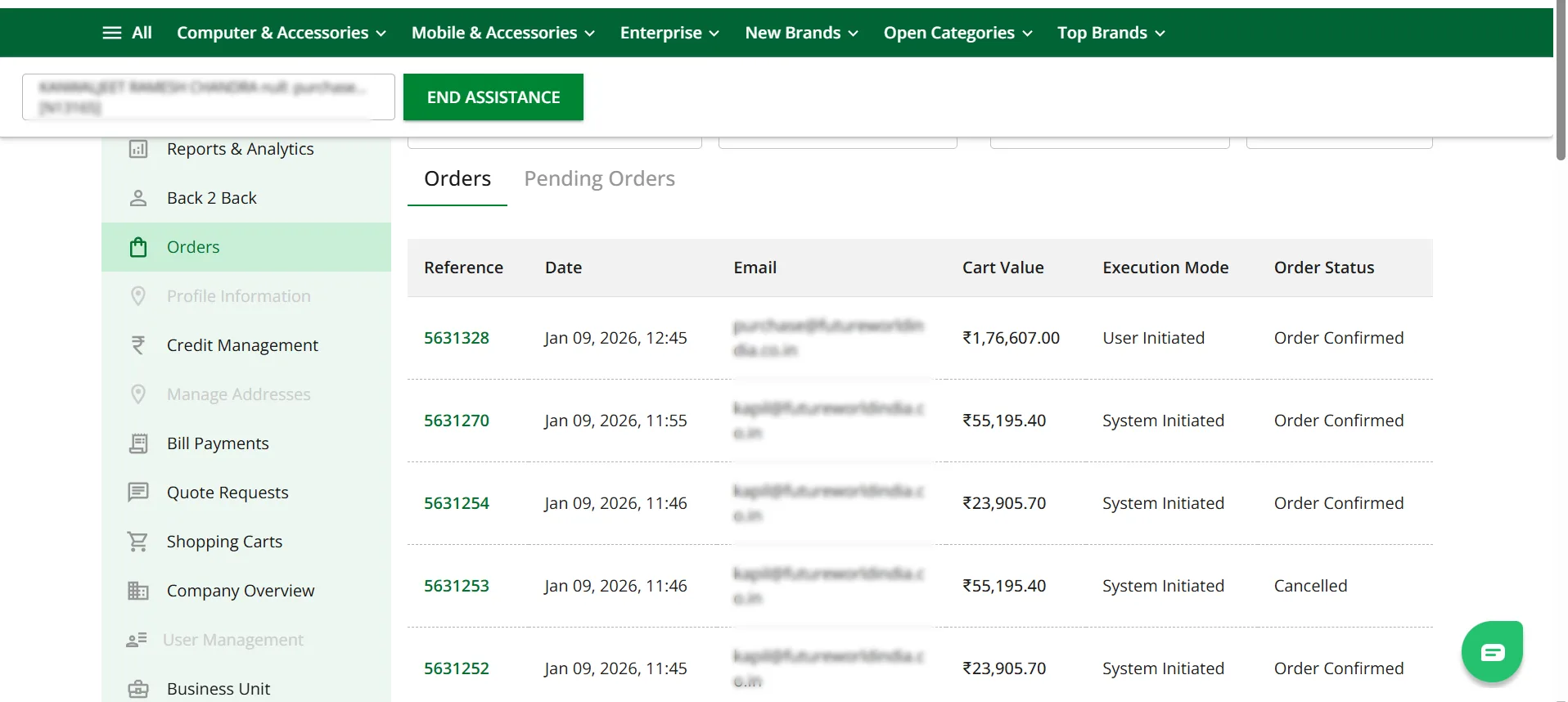
- Each order shows the key details together, like purchased products, pricing, quantities, and billing information, so everything is visible in one place.
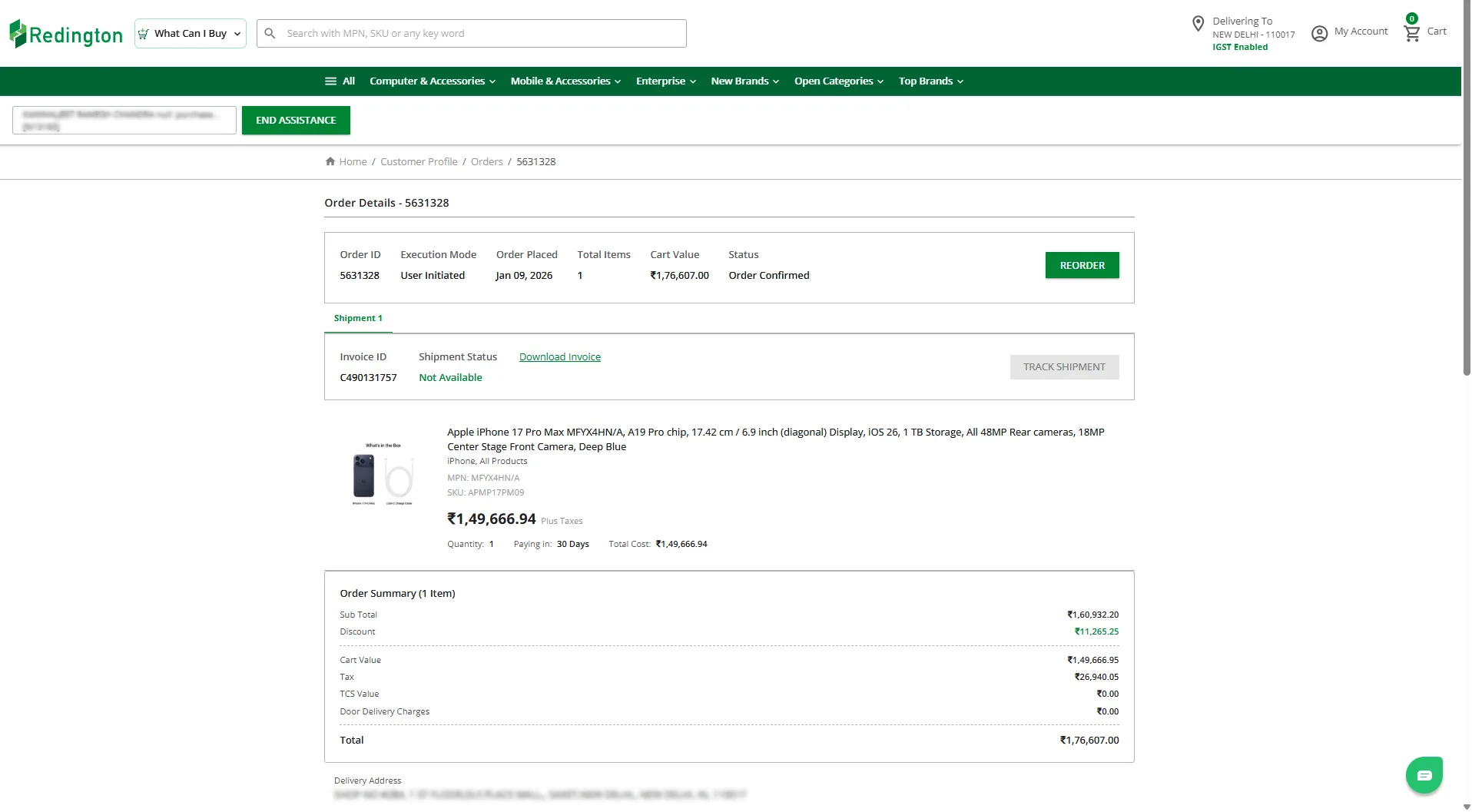
Because of this, there's less need to cross-check details or go back and forth for confirmation when several orders are being handled at the same time.
Tracking Orders Without Constant Follow-Ups
Once an order is placed, the next set of questions usually starts. Has it shipped? When will it arrive?
While placing an order, partners can see the Estimated Delivery Date and decide whether the timeline works for them. After dispatch, they usually check Track Shipment to see where the order stands, instead of calling or following up.
This doesn't eliminate delays altogether, but it makes them easier to manage because expectations are set early.
Documentation That Doesn't Slow Things Down
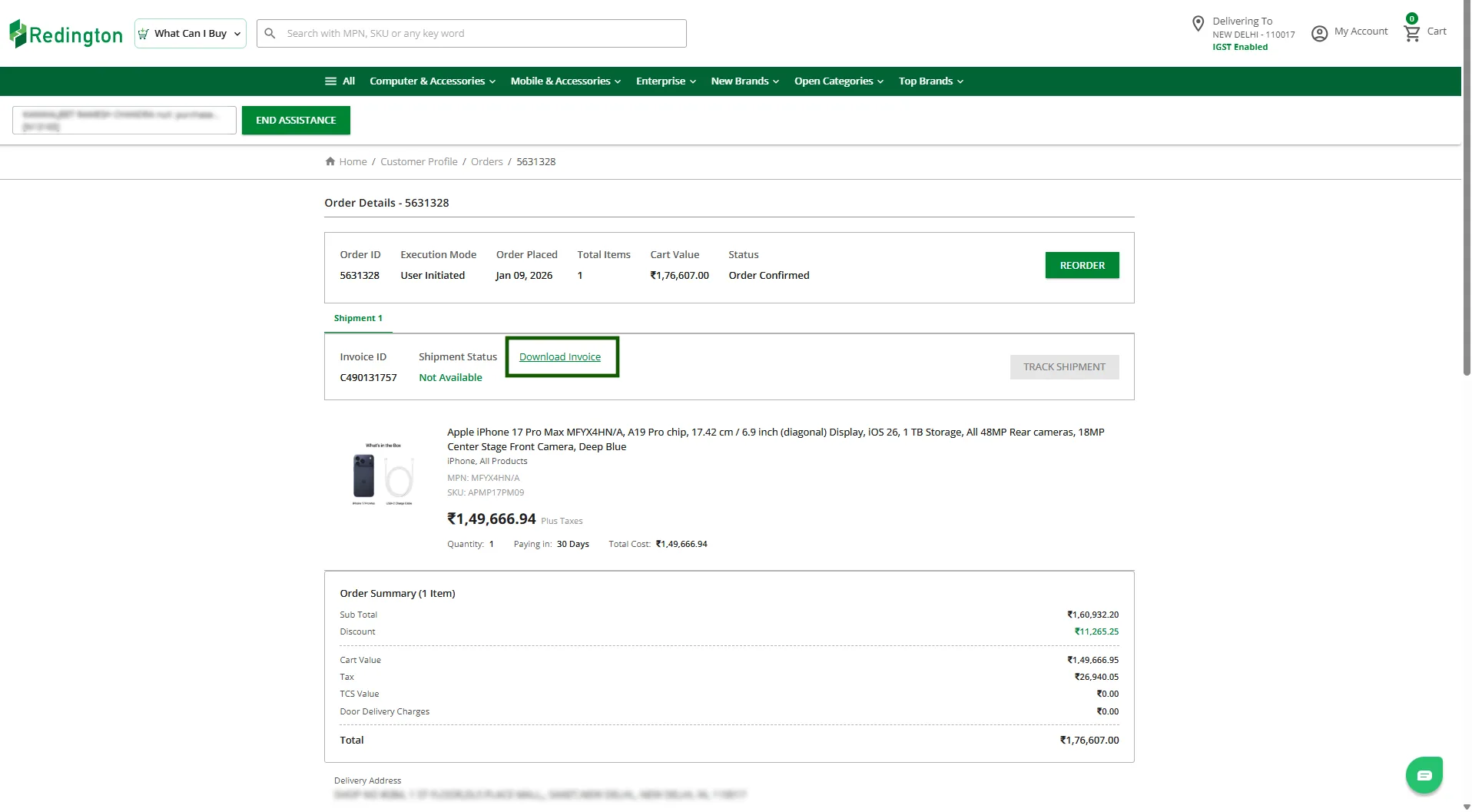
Invoices are often needed after delivery, sometimes much later. When they're not easy to find, even routine tasks take longer.
On Redington Online, invoices are available for download. Partners don't have to request them separately or search through old conversations. This makes reconciliation simpler and keeps records organised when needed.
What Changes in Day-to-Day Work
The difference doesn't feel big right away. It shows up gradually, while work is actually getting done.
- Partners don't have to keep checking order status or delivery details throughout the day
- There are fewer cases where someone has to go back and clarify order information later
- Orders move forward without constant follow-ups, so the workflow feels steadier
- Day-to-day work feels less reactive, because there's more visibility into what's happening next
None of this changes how much work there is. It just changes how smoothly it moves.
Measuring Whether It's Working
Order management isn't just about speed. It's about knowing what to expect.
Move from quote to delivery without chasing updates
Clear order details and predictable timelines
Easy access to records when needed
Fewer things falling through the cracks
When retailers can move from quote to delivery without chasing updates, fewer things fall through the cracks. Clear order details, predictable delivery timelines, and easy access to records are usually good signs that the system is doing its job.
That's where an order management system ecommerce approach starts making a real difference.
Conclusion
As B2B operations scale, managing orders through scattered tools becomes harder to sustain. Delays don't always come from major issues. They come from small gaps repeated across many orders.
A connected order management system helps reduce those gaps. On Redington Online, features like RFQ, complete online orders history, detailed order views, shipment tracking, Estimated Date of Delivery, and invoice downloads support the full order journey without adding complexity.
For retailers and business partners, this means fewer follow-ups, clearer visibility, and a smoother path from quote to delivery.
Explore how Redington Online supports streamlined order management at
Visit Redington Online