

Enterprise hardware rarely makes headlines. But right now, it is sitting at the center of decisions that will shape how businesses operate for the next several years. Servers, storage, networking equipment, commercial PCs, and workstations are still the same categories they have always been. What has changed is the reasoning behind every purchase.
Customers are not upgrading hardware because a refresh cycle told them to. Enterprise hardware trends in 2026 point to customers who are treating infrastructure investment as a multi-year business decision rather than a periodic IT expense. For channel partners and retailers, these changes are worth building a business strategy around.
Why Enterprise Hardware Demand Is Changing
Organizations are investing differently now. Budget decisions are being made with longer horizons in mind, and customers want infrastructure that can grow with the business rather than get replaced every few years.
That means computing, storage, networking, and security are increasingly being planned together rather than bought separately. Demand for next-generation enterprise infrastructure is growing as a result, with customers looking for environments where multiple hardware categories work together rather than operate in isolation.
A customer who walks in for one thing is often sitting on a much bigger requirement underneath. Partners who identify that early are the ones engaging with the full scope of what customers actually need.
Enterprise Hardware Trends Creating Opportunities for Partners
AI adoption is no longer confined to large enterprises with dedicated IT teams. Businesses of all sizes are putting it to work for productivity, automation, and making better use of operational data. The moment those workloads go live, infrastructure gaps become obvious fast.
Compute struggles. Storage slows down. Network bottlenecks appear. Addressing any one of those pulls the others into the conversation. For channel partners, an AI project rarely stays a single-category requirement for long. Customers scoping AI deployments are among the strongest drivers of demand for the latest enterprise IT hardware across compute, storage, and networking categories simultaneously.
IT teams are stretched across most organizations. Customers are not looking to manage multiple supplier relationships for a single deployment. A server conversation becomes a storage conversation. A networking upgrade brings security into scope. That pattern holds consistently across customer sizes and industries.
Partners who are prepared to address the full infrastructure picture are simplifying procurement for customers while increasing the overall value of the project. This is where next-generation enterprise infrastructure becomes a practical conversation rather than a marketing term; customers are actively looking to build environments that are integrated from the ground up.
Manufacturing, engineering, healthcare, financial services, and media production run on advanced computing. The demand for high-performance computing hardware in these verticals goes well beyond a standard commercial refresh, and the customer base for this segment continues to expand.
Projects here tend to be larger in scope, and customer relationships tend to run longer. Partners with product knowledge across these categories are well placed to support requirements that other partners are not equipped to handle.
Security used to come up at the end of a deal. Now it comes up at the start. Customers are asking about firmware protections, endpoint management, and access controls before pricing has even been discussed.
This is happening across every category, commercial PCs, servers, and networking equipment. Partners who factor security into hardware recommendations from the outset are having more complete conversations and reducing late-stage complications.
Hybrid work and cloud dependency have made network reliability a business-critical concern. Organizations that deferred networking upgrades are now actively addressing them, and many of those projects are running alongside compute and storage investments.
Networking consistently comes up in deals that started in an entirely different category. Partners who are prepared for that naturally expand the project scope without having to force the conversation.
Energy costs are a real line item, and finance teams are factoring them into hardware decisions. Equipment that runs efficiently and supports longer lifecycles has a straightforward total cost of ownership story that resonates with procurement and finance stakeholders alike.
How Business Partners Can Prepare for Changing Customer Needs
The businesses investing in enterprise hardware right now are planning for the next three to five years, not a single refresh cycle. For channel partners and retailers, that means the ability to engage across multiple hardware categories is becoming more important than depth in any single one.
A few considerations worth keeping in mind:
- Partners with portfolios that span compute, storage, networking, and security are better positioned to support integrated infrastructure projects.
- Consolidated procurement is a growing preference among enterprise customers, and partners who can support that across categories are a natural fit for larger engagements.
- High-performance computing segments carry stronger project values and longer customer relationships, making them a worthwhile focus for partners looking to grow in enterprise.
- Security requirements are now part of hardware scoping across all categories, and partners who address this early in the process add measurable value to the customer relationship.
- Access to a broad distributor portfolio with reliable stock and category depth gives partners the flexibility to respond to varied project requirements without delays.
The future of enterprise hardware will continue to be shaped by AI adoption, digital transformation, stronger security requirements, and evolving workplace infrastructure needs. These are not short-term trends. They reflect the direction enterprise IT spending is taking for the foreseeable future, and the hardware requirements that accompany them will continue to grow across multiple categories.
Retailers and channel partners who stay informed about the enterprise hardware trends 2026 are better placed to plan stock, structure customer conversations, and respond to project requirements before they become urgent.
The market is moving across multiple categories at once. AI-ready systems, integrated environments, secure infrastructure, advanced networking, and energy-efficient technology are all actively shaping how enterprise customers make purchasing decisions. For channel partners and retailers, access to the latest enterprise IT hardware across these categories enables them to respond to that demand at the right time.
The opportunity lies in understanding which categories are growing, how they connect to each other, and how to position a broader portfolio against what customers are planning to build.
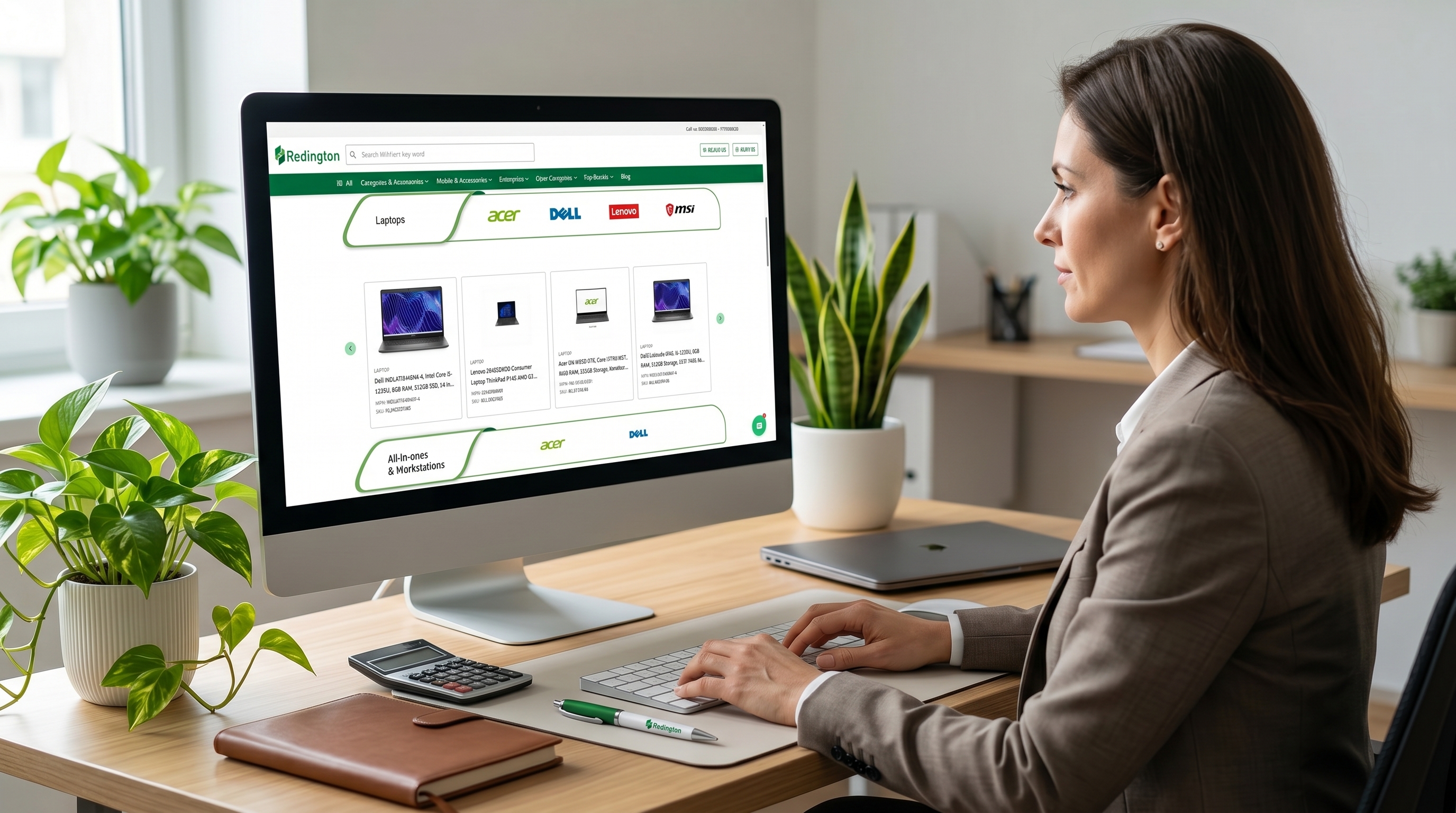
Explore a wide range of enterprise technology solutions and leading IT brands through Redington Online.
Explore Redington Online